
Can UPI transfers trigger a tax notice
UPI and bank transfers do not trigger notices by themselves. What the department actually compares, which transactions get flagged, and who stays safe.
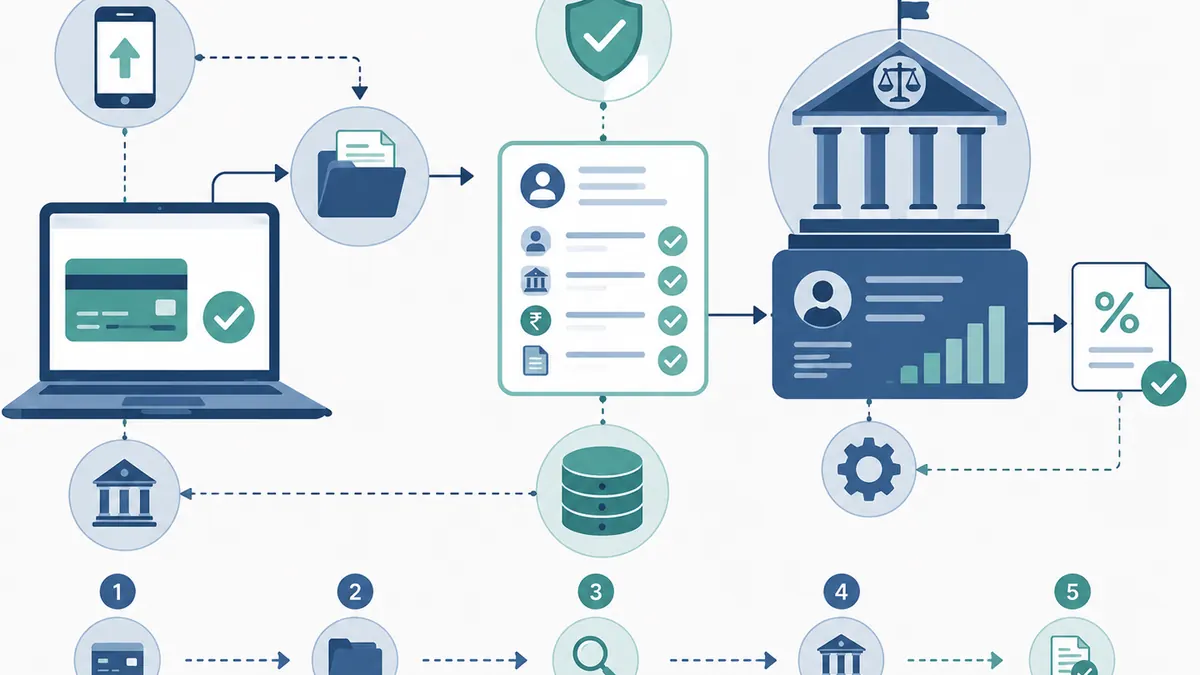
No, tax notices depend on income vs. bank records, not payment method.
On this page
- What digital payment tax scrutiny actually is
- Why the tax department flags certain digital transactions
- How tax scrutiny on digital payments works in practice
- Who comes under scrutiny and who stays safe
- What people get wrong about this
- Misconception 1: Using UPI or bank transfers automatically alerts tax officers once you hit a payment count limit
- Misconception 2: Splitting bills or borrowing money from friends on UPI creates taxable income
- Misconception 3: If your bank reports a high-value transaction, you will automatically get a tax notice
- Misconception 4: Accepting business revenues on a personal UPI handle keeps the money off the tax grid
No, you cannot get an income tax notice simply for using UPI, NEFT, RTGS, or IMPS. The Income Tax Department issues notices based on whether your bank transactions match the income reported in your Income Tax Return, not the payment method you choose.
Digital payments are now routine for everyday expenses. You might send cash to a colleague for lunch, pay rent via online transfer, or receive money from family members. When large sums move across your phone screen, worrying about tax authorities is natural. But chartered accountant Abhishek Soni, CEO and co-founder of Tax2win, explains that using digital channels does not attract tax scrutiny on its own. Instead, tax officials examine whether your total financial activity aligns with the income you declare in your Income Tax Return (ITR).
What digital payment tax scrutiny actually is
Tax scrutiny on digital payments occurs when the Income Tax Department checks your bank account activity against your filed tax return. The specific payment method does not trigger an alert. Instead, automated systems flag mismatches where account transactions significantly exceed your declared taxable income.
Moving money through digital channels like UPI, NEFT, RTGS, or IMPS creates an explicit electronic audit trail. That audit trail is normal financial record-keeping, not a tax violation. Banks track account activity and share high-value transaction data with government databases. Tax software then compares those reported totals against the figures on your filed ITR.
If your tax return shows an annual income of ₹3,00,000, but your bank ledgers show incoming credits of ₹35,00,000, the system marks the gap. And that gap is what draws official attention. Tax officers check if incoming bank credits represent taxable earnings that you omitted from your filing.
In July 2026, Amit, a 31-year-old salaried worker in Pune, received ₹15,00,000 in total bank credits over the financial year. This included his salary paid through NEFT, alongside ₹20,000 collected over UPI from roommates to split rent. Because Amit declared his full ₹14,80,000 salary on his ITR, the tax department saw that his transactions matched his tax filings. He received no notice.
Why the tax department flags certain digital transactions
The Income Tax Department flags digital transactions when there is a clear discrepancy between your reported income and your bank deposits. Primary triggers include collecting unrecorded business payments through UPI, making high-value cash deposits without a clear source, declaring low income alongside high transaction volume, and failing to explain incoming transfers.
Receiving digital payments creates a problem only if you cannot explain where the funds came from or why they were excluded from your tax return. Many small businesses, freelancers, and shop owners accept daily customer payments through personal UPI handles. That money counts as business revenue. If you collect business revenue through UPI but fail to report those earnings in your ITR, tax authorities can flag your account for hiding income.
The same rule applies to large lump sums arriving via RTGS or IMPS. If you receive a significant transfer, you must be able to prove its source if questioned. A gift from a relative, a loan repayment, or an advance for a project all have different tax treatments. If you cannot explain where the money came from, tax officers can treat it as unexplained income.
| Scenario | Mode Used | Tax Department Treatment |
|---|---|---|
| Splitting shared expenses with friends | UPI | Non-taxable personal transfer |
| Collecting customer payments for services | UPI or IMPS | Taxable business income (Must report in ITR) |
| Receiving monetary gifts from family | NEFT or RTGS | Non-taxable transfer if source is valid |
| High cash deposits with low declared earnings | Cash / Transfer | Flagged for potential income mismatch |
Neha, 28, operates a home decor setup in Jaipur. During FY 2025-26, she collected ₹9,50,000 from clients using her personal UPI QR code. When filing her ITR, she reported a total income of ₹2,50,000 to keep her tax liability zero. The tax department flagged her account because her frequent UPI deposits showed regular business operations that did not match her declared return.
How tax scrutiny on digital payments works in practice
Tax scrutiny begins when automated banking systems report high-value account movements to tax authorities. If the reported transaction totals do not align with your filed tax returns, tax software flags the account. The department then reaches out to ask for official verification.
Banks compile routine reports on account holders who execute major financial transactions, including cash deposits, and transmit this information to the tax department. The government uses automated tools to cross-reference bank data with ITR filings.
So a bank report does not equal an immediate tax penalty. High-value transactions do not result in tax notices if they are legitimate, supported by documentation, and consistent with your reported income. If you sell a flat and receive ₹60,00,000 through RTGS, and you report the capital gains correctly on your ITR, your file remains clean. But if you deposit large sums of cash or accept business revenue without declaring it, the system flags the gap.
Suresh, 45, sold a plot in Bengaluru for ₹40,00,000 in May 2026. The buyer transferred the money into Suresh’s savings account via RTGS. Suresh kept his property registration papers, bank statements, and tax payment receipts intact while filing his ITR. Although his bank reported the large RTGS credit to the government, Suresh received no tax notice because his return fully explained the transaction.
Who comes under scrutiny and who stays safe
Taxpayers who report all income sources, keep supporting documents, and align bank activity with their tax filings remain safe from scrutiny. Scrutiny focuses on individuals who declare low taxable income despite heavy account receipts, take hidden business payments via UPI, or cannot prove the origin of incoming transfers.
Staying clear of tax notices comes down to accurate reporting. The channel you use to move money makes no difference. Whether you use UPI apps, IMPS, RTGS, NEFT, or physical cheques, every rupee entering your bank account must have a traceable source. Any portion that constitutes taxable income must appear on your ITR.
If you run a commercial operation, do not treat your personal UPI account as an unmonitored channel. Every commercial receipt counts toward your gross business turnover. Conversely, everyday transfers between family members or shared dining payments between friends are not taxable income. But you should be able to explain those payments if asked.
Rohan, 34, works as an independent contractor in Delhi. He earns ₹22,00,000 annually through bank transfers and uses UPI daily to buy groceries, send money to his parents, and pay rent. He records all client invoices, files his ITR using the correct business tax form, and preserves his account statements. Because his digital transfers line up with his declared earnings, his account faces no risk.
What people get wrong about this
Misconception 1: Using UPI or bank transfers automatically alerts tax officers once you hit a payment count limit
The payment method itself does not generate an income tax notice. Tax algorithms flag discrepancies between the total financial entries in your bank account and the income you report on your ITR, regardless of whether you used UPI, NEFT, or IMPS.
Misconception 2: Splitting bills or borrowing money from friends on UPI creates taxable income
Personal transfers for shared dinners, cab fares, or short-term personal loans are not taxable earnings. They are personal movements of money. However, if you receive unusually large amounts, keep simple records or messages showing the context.
Misconception 3: If your bank reports a high-value transaction, you will automatically get a tax notice
Banks are legally required to report certain high-value transactions to the tax department. That reporting is routine data sharing. If the transaction is genuine, documented, and properly reflected on your ITR, the tax department will not issue a notice.
Misconception 4: Accepting business revenues on a personal UPI handle keeps the money off the tax grid
Digital channels create a permanent electronic trail. Frequent incoming transfers from multiple parties signal business operations during automated tax reviews. Leaving those receipts off your ITR leads directly to scrutiny for undisclosed income.
Common questions
Do UPI or NEFT transactions directly cause a tax notice?
No, tax notices depend on income vs. bank records, not payment method.
Why might digital payments trigger tax scrutiny?
Discrepancies between reported income and actual bank transactions.
Can I get a tax notice for receiving money via UPI?
Only if there's a mismatch between declared income and received funds.
How does the tax department check digital transactions?
By comparing bank records with filed tax returns.
What if my bank transactions match my ITR?
No notice is issued as there's no discrepancy.
Checked against Income Tax Department on 26 July 2026. Rules change, so confirm on the official portal before acting.
SimpleDoc is independent and not affiliated with any government body. This is general guidance, not financial or legal advice. Always confirm details on the official portal before acting.